Garage Door Repair Chilliwack: Signs Your Garage Door Needs Attention Before It Stops Working Completely
The Small Delay That Usually Comes First
Most garage doors do not fail without warning. They usually start with something subtle enough to excuse.
Maybe the door hesitates for a second before moving. Maybe it sounds a little rougher than it did last month. Maybe the opener still works, but not with the same smooth confidence it used to. These small changes are easy to live with, especially when the door still opens and closes.
That is usually the mistake.
The early stage of a problem is often the cheapest and simplest time to deal with it. Once a garage door starts compensating for friction, imbalance, or wear, the rest of the system begins sharing that stress. That is why practical Garage Door Repair is not just about fixing what is broken. It is about catching what is starting to go wrong before the whole system feels it — something https://www.comfortdoors.ca/ helps homeowners stay ahead of with a more proactive approach.
Garage Door Repair Chilliwack Starts With How the Door Moves
For many homeowners, the first real clue is not a sound. It is movement.
A healthy garage door should travel in a controlled, even way. If one side seems to dip, the door looks slightly crooked, or the movement has become jerky, something is already changing inside the system. That could point to worn rollers, track drag, spring imbalance, or strain elsewhere.
This is exactly why local homeowners often end up searching for https://www.comfortdoors.ca/garage-door-repair-chilliwack before the door completely stops. The issue does not begin as a full breakdown. It begins as a door that feels “a bit off” for a few days or a few weeks.
That period matters more than people think. If the system keeps cycling under strain, the repair rarely stays small for long.
See also: Smart Ways Homeowners Can Extend the Life of Their Roof
When the Door Starts Talking, Listen
A noisy garage door is not always an emergency, but it is always information.
Grinding, squeaking, and rattling are not random.
Grinding often points to rollers or parts that are no longer moving cleanly. Squeaking can suggest dry hinges or friction at moving points. Rattling usually means vibration is loosening hardware or that the system is no longer running as tightly as it should.
Homeowners often get used to these sounds because they build slowly. But gradual does not mean harmless. A garage door that is getting louder is usually telling you that wear is spreading.
A heavy bang or sudden pop should change the plan immediately.
This is the sound people remember. If the door suddenly makes a violent snap, bang, or popping sound, that can point to a spring-related failure or another major problem that should not be ignored.
That is where the tone of the situation changes. This is no longer about “keeping an eye on it.” It is about stopping use and getting it checked properly before someone gets hurt or more parts are damaged.
Garage Door Opener Repair and Garage Door Spring Repair Are Often Connected
One reason homeowners misread garage door problems is that they focus on the part they use most: the opener.
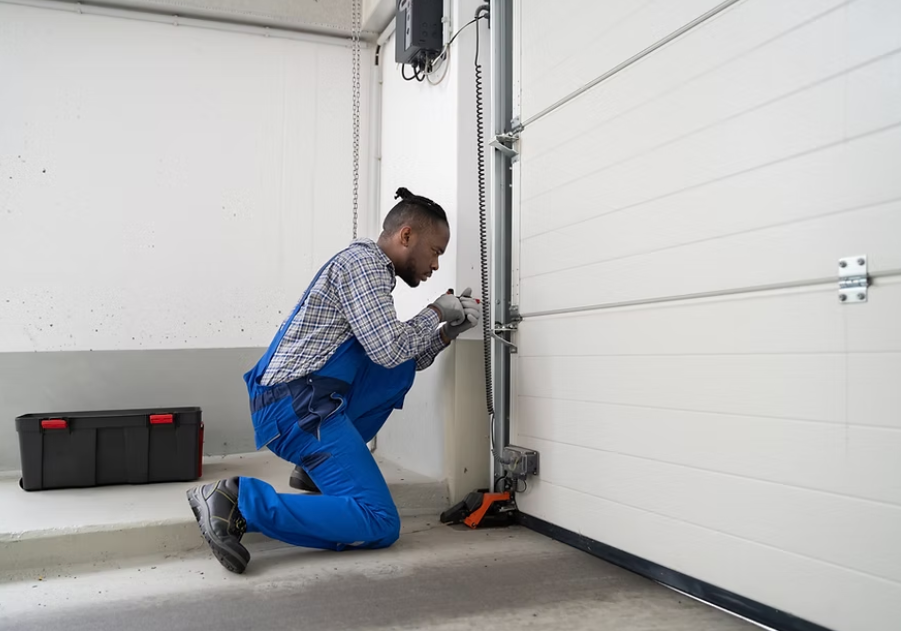
Sometimes that is fair. Sometimes the opener really is the issue. But often, a struggling opener is reacting to something else. If the door is out of balance, dragging in the tracks, or forcing worn parts to compensate, the opener has to work harder every time it runs.
That is why Garage Door Opener Repair and Garage Door Spring Repair often end up in the same conversation. A weak or failing spring changes how the whole system behaves. The opener may sound louder, respond more slowly, or seem unreliable when the real problem is the door no longer being properly counterbalanced.
For homeowners, the takeaway is simple: do not assume the noisiest part is the only part that matters.
Common Questions Homeowners Ask Before the Door Fails
This is where a little property owner education goes a long way.
“Why is my garage door suddenly slower than usual?”
A slower door often means the system is under more resistance than before. That may come from wear, friction, poor balance, or an opener working harder than it should. Slow movement is rarely a meaningless quirk.
“Why does the door reverse or stop halfway?”
That can happen when sensors are dirty, misaligned, or reacting to an issue elsewhere in the system. It can also happen when the opener senses resistance and responds as if something is in the way. Either way, it is a warning sign worth taking seriously.
“How do I know when repair is no longer enough?”
That is the real question. If the same door keeps developing new problems, if multiple components are wearing out together, or if the system no longer feels dependable, repeated repair may stop being the smartest path.
The Point Where Garage Door Installation Makes More Sense
There are times when a repair is still the right call, and times when it is not.
If the issue is isolated, the door is otherwise sound, and the system still has good years left in it, targeted Garage Door Repair is usually the better move. But if the problems are repeating, the opener is aging, the spring system is under strain, and the door no longer feels reliable, Garage Door Installation may become the more practical long-term decision.
That is where honest guidance matters.
Comfort Garage & Doors Inc. fits naturally into this kind of conversation because homeowners do not just need someone to show up when the door fails. They need someone to explain what is happening before it gets there. With owner-led service, fast response, full-system diagnostics, honest recommendations, a safety-first approach, and a long-term reliability mindset, the company helps homeowners make smarter decisions earlier.
That is the real value of early repair awareness. It keeps a strange sound from becoming a dangerous one. It keeps a slow opener from becoming a dead one. And it keeps a manageable repair from turning into the kind of problem that leaves the door stuck, the car trapped, and the bill much larger than it needed to be.